Killer Korean in 60 Seconds(+Topik focused) '표준어' 와 '사투리' Standard Korean and Dialect
📌 This premium briefing is part of the integrated digital curriculum: Killer Korean in 60 Seconds
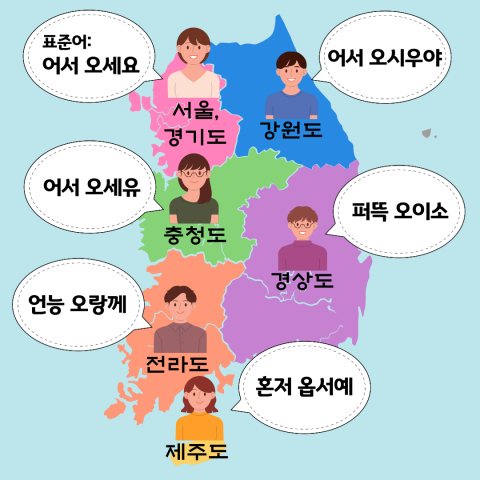
Standard Korean & Dialect: Navigating Linguistic Identity (표준어와 사투리)
표준어와 사투리 (Pyo-jun-eo wa Sa-tu-ri)- Standard Korean (표준어) serves as the official national standard for administration, news broadcasts, and formal education to ensure nationwide uniformity.
- Dialects (사투리/방언) preserve regional heritage, history, and unique emotional nuances, forming the core foundation of Korea's cultural diversity.
- Mastering the contrast between formal 표준어 and regional 사투리 empowers Korean language learners to navigate both professional settings and daily conversational intimacy.

📺 Live Video Verification
Analyze real-world pronunciation and authentic language usage comparing standard phrasing and regional dialect expressions in modern media.
📚 High-Yield Vocabulary Masterclass
Examine the core lexical components needed to discuss language policy, cultural regionalism, and everyday communication in Korea.
1. 표준어 [pyo-jun-eo]
It is standard protocol to use Standard Korean in formal settings.
2. 사투리 [sa-tu-ri]
You could feel the warm Gyeongsang-do dialect accent in his speech.
3. 표준어와 사투리 [pyo-jun-eo wa sa-tu-ri]
Understanding the difference between Standard Korean and Dialect is key for Korean learners.
✍️ Practical Context & Sentences Analysis
Deconstruct how standard Korean and regional dialects operate in real-life societal contexts.
한국어 분석 (Korean):
'표준어와 사투리'는 언어의 통일성과 다양성을 동시에 나타내는 중요한 키워드입니다. 표준어는 공식적인 교육, 방송, 행정 등에서 사용되어 언어적 통일성을 유지하고 전국적인 의사소통을 원활하게 하는 역할을 합니다. 반면 사투리(방언)는 각 지역의 역사와 문화를 담고 있어 언어의 다양성과 정체성을 형성하는 근간이 됩니다. 최근에는 한국 드라마나 예능에서 사투리가 친근감과 개성을 나타내는 요소로 빈번하게 등장하면서, 한국어 학습자들에게도 흥미로운 주제가 되고 있습니다.
English Translation:
The phrase 'Standard Korean and Dialect' represents both the unity and diversity of a language. Standard Korean is utilized in official education, media, and governance to maintain linguistic uniformity and facilitate seamless nationwide communication. Conversely, dialects preserve the history and regional culture, forming the bedrock of linguistic identity. Recently, as dialects appear frequently in Korean dramas and shows to reflect charm and personality, they have become an engaging subject for Korean learners.
- 공식 논의 시 (Formal Policy Context):
"표준어 교육 강화와 사투리 보존 정책 사이에서 균형을 찾아야 한다."
(We must find a balance between strengthening standard language education and preserving dialect policies.) - 문화적 설명 시 (Cultural Explanation Context):
"제주도 사투리는 육지의 표준어와는 완전히 다른 독특한 문법을 가지고 있다."
(Jeju dialect possesses a unique grammar system entirely distinct from mainland Standard Korean.) - 일상 대화 시 (Daily Conversation Context):
"고향 친구들과는 사투리로 대화하는 것이 훨씬 편하다."
(It is much more comfortable to speak in dialect when hanging out with childhood friends.)
✏️ Interactive Assessment Quiz
Test your comprehension of Standard Korean and Dialect usage in different societal settings.
Q1. Context Scenario: Which statement accurately describes the main functional difference between 표준어 (Standard Korean) and 사투리 (Dialect)?
Q2. Fill in the blank: Complete the sentence using the most appropriate term for a formal setting.
뉴스 아나운서와 정부 공식 발표문에서는 모든 국민이 정확히 이해할 수 있도록 ( )를 사용하는 것이 원칙이다.
🔗 Curated Related Briefings
Elevate Your Advanced Korean Fluency
Receive daily 60-second briefings covering real-world Korean expressions, media insights, and TOPIK grammar masterclasses.
Subscribe to Killer Korean 🚀 Visit "국립국어원" (National Institute of Korean Language)


댓글
댓글 쓰기