 Super Real Korean
🏢 K-Office History: Life of 6-Day Workweek Salarymen in Korea | Essential TOPIK Level 2-3 Korean
📌 This lesson is part of our integrated Korean career & business curriculum: Workplace Safety & Job News Series
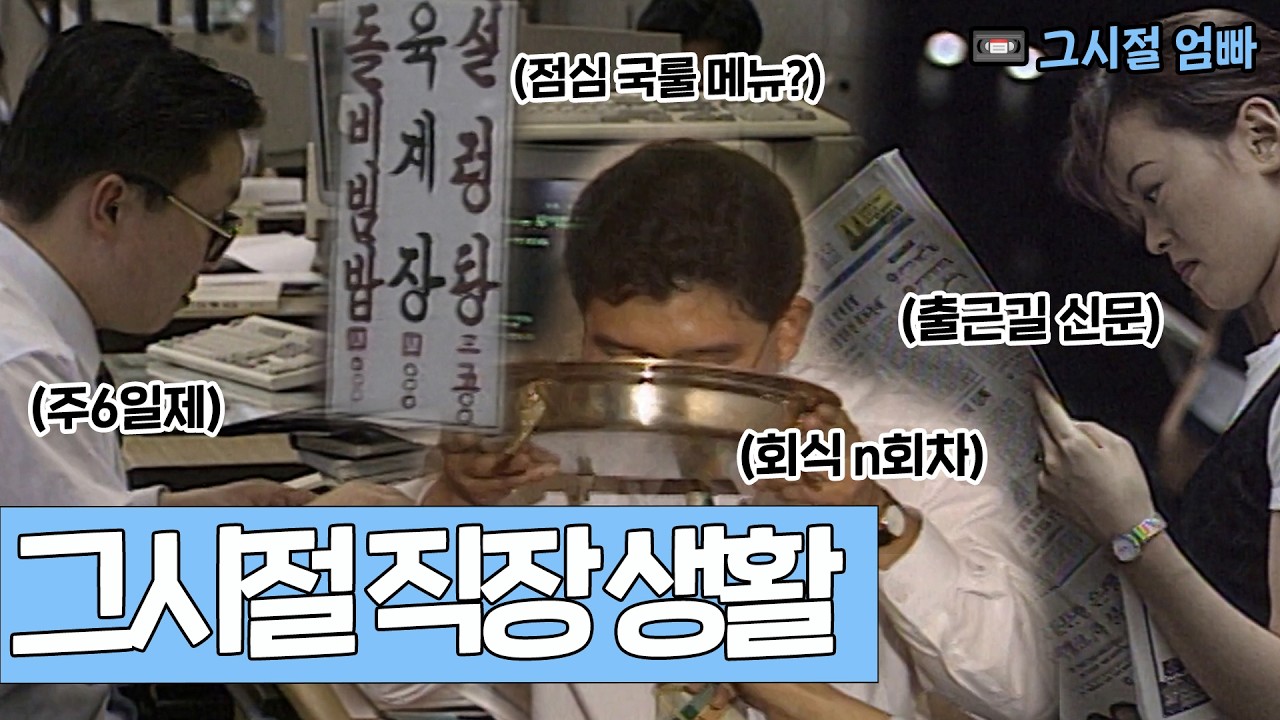
[그 시절 한국인] 주 6일제 샐러리맨의 하루와 한국 직장 문화
K-Office History: Life of 6-Day Workweek Salarymen in Korea & Essential TOPIK Level 2-3 Korean-
1990년대 KBS 아카이브 방송을 통해 한국 직장인(샐러리맨)의 과거 주 6일제 근무, 출퇴근 전쟁, 회식 문화, 복장 자율화 역사를 살펴봅니다.
Explore the history of Korean office workers in the 1990s through KBS archives, covering the 6-day workweek, commute battles, team dinners, and dress code evolution. -
어휘장 이론(Lexical Field Theory)을 적용해 핵심 어휘 '출퇴근(出退勤)'의 상위어, 유의어, 반의어, 결합어 구조를 체계적으로 해설합니다.
Systematic analysis of the core workplace term 'Commute (출퇴근)' using Lexical Field Theory, including hypernyms, synonyms, antonyms, and collocations. -
TOPIK 2~3급 초·중급 레벨 필수 문법('-기 위해서', '-(으)ㄹ 수밖에 없다', '-아/어/여지다')과 예문을 비즈니스 맥락에서 종합 정리합니다.
Comprehensive coverage of TOPIK Level 2-3 core grammar patterns ('-기 위해서', '-(으)ㄹ 수밖에 없다', '-아/어/여지다') with practical workplace examples.
🎬 Media Learning Verification Video
아래 KBS 아카이브 영상을 보며 과거 한국 샐러리맨들의 치열했던 일상과 시대별 직장 문화의 변화 과정을 확인해 보세요.
🌐 Lexical Field Theory Analysis: 핵심어휘 '출퇴근(出退勤)'
한국어-영어 이중언어 체계를 적용하여, 한국 직장인의 일상 어휘장(Lexical Field)의 핵심 단어인 '출퇴근'을 구조적으로 분석합니다.
Pronunciation: [출퇴근 / chul-toe-geun] | Hanja Etymology: 出 (나갈 출) + 退 (물러날 퇴) + 勤 (부지런할 근)
Primary Definition: 회사나 일터로 일하러 나가고(출근), 일을 마치고 돌아오는(퇴근) 일련의 행위 (Commuting to and from work).
직장 일상 (Workplace Routine)
근로자가 매일 반복하는 직업적 이동 및 생활 영역.
통근 (通勤), 출퇴근길
'통근'은 차를 타고 일터로 왔다 갔다 함을 의미함.
재택근무 (Telecommuting), 현장근무
집에서 근무하거나 별도의 이동 없이 현장에서 상주함.
지옥철, 러시아워, 막차, 도로 정체
출퇴근 시간에 발생하는 교통 혼잡 및 관련 현상.
- 출퇴근을 하다 (To commute to and from work)
- 출퇴근 시간 / 러시아워 (Commute hours / Rush hour)
- 출퇴근 전쟁 (The battle of daily commuting)
📚 Additional TOPIK 2~3 Workplace Vocabulary
영상에서 핵심적으로 등장하는 한국 직장 역사 및 생활 관련 어휘 4가지를 학습합니다.
1. 회식 hoe-sik (TOPIK Level 2)
KO: 과거 한국 직장인들은 퇴근 후에 동료들과 회식을 자주 했습니다.
EN: In the past, Korean office workers often had team dinners with colleagues after work.
2. 야근 ya-geun (TOPIK Level 2~3)
KO: 일이 많아서 매일 밤 10시까지 야근을 해야 했습니다.
EN: Because of a heavy workload, I had to work overtime every night until 10 PM.
3. 수당 su-dang (TOPIK Level 3)
KO: 토요일에 근무하면 회사에서 특근 수당을 지급했습니다.
EN: If workers worked on Saturdays, the company paid extra work allowances.
4. 여가 yeo-ga (TOPIK Level 3)
KO: 최근 사람들은 돈보다 개인의 여가를 더욱 중요하게 생각합니다.
EN: Recently, people value personal leisure time more than money.
✍️ Essential TOPIK Level 2~3 Grammar Blueprint
영상 속 대화와 비즈니스 상황에서 자주 쓰이는 TOPIK 2~3급 핵심 문법 3가지입니다.
Functional Analysis: 어떤 목적이나 목표를 가지고 행동할 때 사용하는 목적 표현입니다. (Level 2)
KO: 가족과 주말을 보내기 위해서 토요 휴무를 반깁니다.
EN: In order to spend the weekend with family, workers welcome Saturdays off.
Functional Analysis: 다른 방법이나 선택지가 없어 당연히 그렇게 해야 함을 나타냅니다. (Level 3)
KO: 도로가 막혀서 지하철을 타고 출근할 수밖에 없습니다.
EN: Because the roads are blocked, I have no choice but to commute by subway.
Functional Analysis: 상태나 성질이 점차 변화하는 과정을 나타냅니다. (Level 2~3)
KO: 요즘은 직장인들의 복장이 훨씬 자유롭게 되어졌습니다 (자유로워졌습니다).
EN: Nowadays, office workers' attire has become much more casual and free.
✏️ Interactive Editorial Assessment
본문 학습 내용을 확인하는 실전 연습 문제입니다. 정답 버튼을 클릭해 보세요.
Q1. 어휘장 이론 관점에서 '출퇴근(出退勤)'의 반의어(Antonym)로 가장 적절한 것은 무엇입니까?
Q2. '다른 선택지가 없다'는 의미를 전달하는 올바른 문법 표현은 무엇입니까?
❓ 자주 묻는 질문 / Frequently Asked Questions (FAQ)
💼 Q1. What was the '6-day workweek' in Korea in the past?
In the past in Korea, people worked Monday through Saturday. Starting from the late 1990s, it transitioned to alternating Saturdays off and eventually settled into the current 5-day workweek.
🏢 Q2. What is the exact meaning of the slang term '지옥철'?
'지옥철' is a compound word of 'Hell' and 'Subway', describing an extremely crowded subway during rush hours.


댓글
댓글 쓰기