Learn Korean with Core Adverb 'O-hi-ryeo'(오-히-려) | Real TOPIK Level 2 Guide(Contrary to what is expected) │Topik essential & Korean study
📌 이 글은 Killer Korean in 60 Seconds의 일부입니다.
📌 This article is part of Killer Korean in 60 Seconds.
오히려
[ O-hi-ryeo ] — On the contrary / Rather / Instead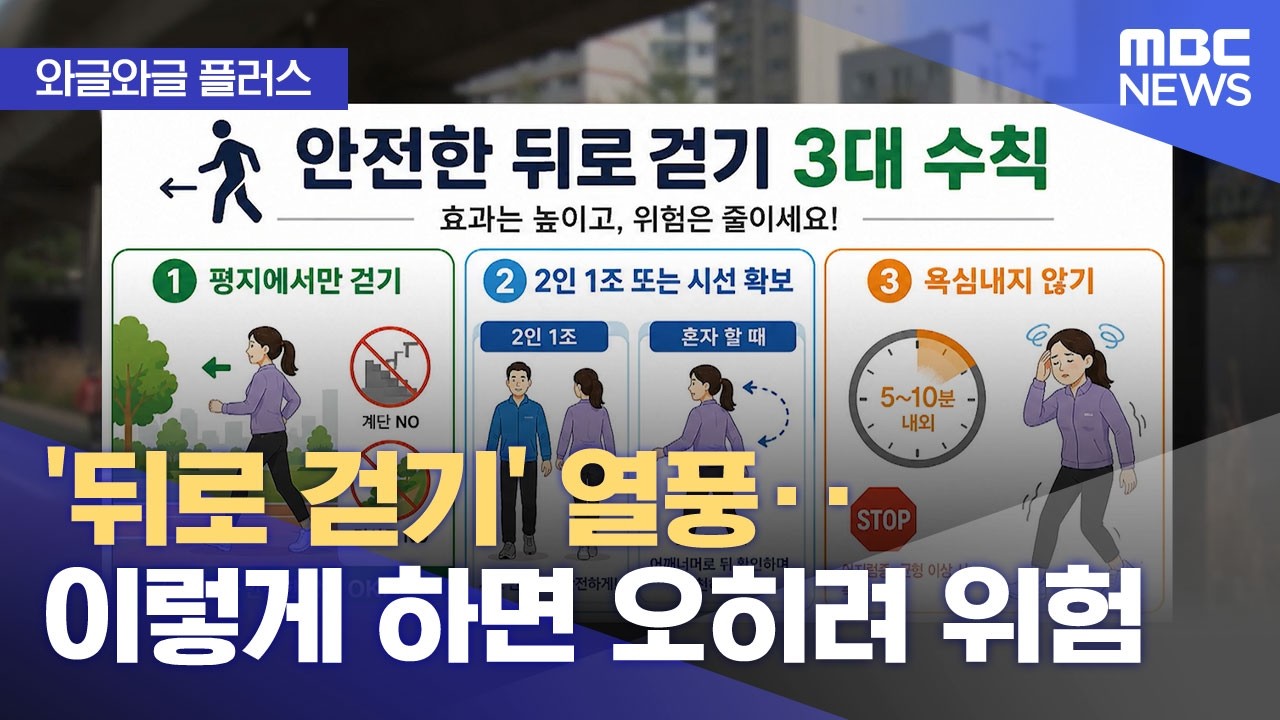
[뉴스 내용] 다이어트를 위해 유행하는 '뒤로 걷기' 운동을 계단 등 잘못된 방법으로 하면 건강을 해치고 '오히려' 치명적인 낙상 사고로 이어질 수 있다는 MBC 뉴스 대사입니다.
[News Transcript] This MBC news report warns that while 'backward walking' is trending as a diet trend, performing it incorrectly on stairs can harm your health and 'rather' lead to fatal fall accidents.
[학습 과제] 오늘의 핵심 과제는 부사 '오히려'의 문맥적 의미를 이해하고, 동시 동작을 나타내는 연결어미 및 TOPIK 필수 어휘를 정복하는 것입니다.
[Learning Task] Today's core task is to grasp the contextual meaning of the adverb '오히려' (rather) and master connective endings for simultaneous actions along with essential TOPIK vocabulary.
🎬 학습 영상 확인하기 (Watch the Learning Video)
실제 방송 오디오를 들으며 발음과 억양을 확인해 보세요.
Listen to the actual broadcast audio to check the pronunciation and intonation.
🔍 핵심 부사 어휘장 입체 분석 (In-depth Analysis of Core Adverb)
오히려 [ O-hi-ryeo ]
의미 (Meaning): 일반적인 예상이나 기대, 또는 원래의 목적과는 반대로.
English Meaning: Contrary to what is expected, naturally assumed, or anticipated; rather, instead, on the contrary.
| 유의어 (Synonyms) | 차라리 [ Cha-ra-ri ] (Rather), 도리어 [ Do-ri-eo ] (On the contrary) |
| 반의어 (Antonyms) | 당연히 [ Dang-yeon-hi ] (Naturally), 예상대로 [ Ye-sang-dae-ro ] (As expected) |
📚 TOPIK 필수 어휘 (Essential TOPIK Vocabulary)
1. 소모 [ so-mo ]
의미: 에너지를 쓰거나 물품을 사용해 없앰.
Meaning: Consumption, exhaustion, or burning up (e.g., calories, energy).
예문: 칼로리 소모가 많아 다이어트에 효과적입니다.
Example Sentence: It is effective for dieting because calorie consumption is high.
2. 우려 [ u-ryeo ]
의미: 마음속으로 근심하거나 걱정함.
Meaning: Concern, worry, or anxiety.
예문: 잘못된 방법의 뒤로 걷기가 늘면서 우려가 커지고 있습니다.
Example Sentence: Concerns are growing as incorrect backward walking methods increase.
3. 치명적 [ chi-myeong-jeok ]
의미: 생명이나 일의 성패에 회복하기 어려운 큰 손상을 주는 것.
Meaning: Fatal, deadly, or critically damaging.
예문: 치명적인 낙상 사고로 이어질 위험이 큽니다.
Example Sentence: There is a high risk of leading to a fatal fall accident.
4. 낙상 [ nak-sang ]
의미: 넘어지거나 떨어져서 몸을 다치는 일.
Meaning: Falling and suffering a physical injury; a fall accident.
예문: 낙상 사고에 대비해 반드시 평지에서 걸어야 합니다.
Example Sentence: You must walk on flat ground to prevent fall accidents.
🏛️ 문화 노트 (Culture Note)
한국의 건강 유행과 안전 의식 (Health Trends & Safety in Korea)
한국인들은 다이어트와 건강 관리에 관심이 매우 높아서, 새로운 운동법(계단 오르기, 뒤로 걷기 등)이 뉴스나 SNS를 통해 빠르게 유행하곤 합니다.
Koreans have a strong interest in health and weight management, which causes new exercise trends (such as stair climbing or backward walking) to spread rapidly through news and social media.
하지만 뉴스에서는 이러한 열풍 속에서 올바른 안전 지침을 지키는 것의 중요성을 지속적으로 강조합니다.
However, news outlets continuously emphasize the importance of observing safety guidelines amidst these health trends.
📐 TOPIK 필수 문법 (Essential TOPIK Grammar)
1. -(으)면서 [ -(eu)myeon-seo ]
의미: 두 가지 이상의 동작이나 상태가 동시에 일어남을 나타냄.
Meaning: A connective ending indicating that two or more actions or states occur simultaneously ('while', 'as').
예문: 잘못된 방법이 늘면서 우려가 커지고 있습니다.
Example Sentence: Concerns are growing while incorrect methods are increasing.
2. -기 때문(에) [ -gi ttae-mun(-e) ]
의미: 앞절의 내용이 뒤절의 원인이나 이유임을 나타냄.
Meaning: Expresses that the preceding statement is the reason or cause for the following statement ('because of', 'due to').
예문: 다이어트에 효과적이라는 이유 때문인데요.
Example Sentence: It is because of the reason that it is effective for dieting.
3. -(으)ㄹ 때 [ -(eu)l ttae ]
의미: 어떤 일이나 현상이 지속되거나 일어나는 시점.
Meaning: Refers to the time or duration when an event or state occurs ('when', 'at the time of').
예문: 앞으로 넘어질 때와는 달리 계단에서 뒤로 미끄러지면 큰 충격을 받습니다.
Example Sentence: Unlike when falling forward, if you slip backward on the stairs, you receive a heavy impact.
📌 학습 요약 (Lesson Summary)
1. 오히려 (Rather/Instead): 기대했던 바와 반대되는 예상 외의 결과를 설명할 때 활용합니다.
1. 오히려 (Rather/Instead): Used to describe unexpected outcomes that contradict initial expectations.
2. -(으)면서 (While): 두 가지 행동이나 상태가 동시 진행됨을 문법적으로 연결합니다.
2. -(으)면서 (While): Grammatically connects two simultaneous actions or ongoing states.
🗣️ 쉐도잉 연습 (Shadowing Practice)
문장 1 (Sentence 1): 건강을 위해 시작했지만 오히려 독이 될 수 있습니다.
Translation: I started it for health, but it could rather become poison.
Pronunciation: [ Geon-gang-eul wi-hae si-jak-hae-sseim-ni-da-man o-hi-ryeo dog-i doel su it-seum-ni-da. ]
문장 2 (Sentence 2): 계단에서 뒤로 걸으면 치명적인 사고로 이어집니다.
Translation: Walking backwards on stairs leads to fatal accidents.
Pronunciation: [ Gye-dan-e-seo dwi-ro gweol-eu-myeon chi-myeong-jeok-in sa-go-ro i-eo-jim-ni-da. ]
💡 원어민 표현 & 주의할 실수 (Native Expression & Common Mistakes)
'오히려' vs '차라리' 차이점 (Difference between '오히려' and '차라리')
오히려: 객관적인 결과가 예상과 다를 때 사용 ("약 먹고 오히려 더 아파요.")
오히려: Used when an objective result turns out contrary to expectations ("After taking medicine, it hurts even more instead.")
차라리: 두 선택지 중 아예 다른 쪽을 주관적으로 선택할 때 사용 ("이럴 거면 차라리 집에서 쉴래요.")
차라리: Used when subjectively opting for a better alternative between choices ("If it's going to be like this, I'd rather rest at home.")
❌ 실수 예시 (Mistake): "운동을 항상 해서 더 피곤해요." (어색한 문맥)
⭕ 올바른 표현 (Correct): "운동을 했는데 오히려 더 피곤해요." (예상과 다른 결과)
Explanation: If exercising leads to fatigue instead of vitality, use '오히려' to express contrast with expectations.
📖 읽기 및 말하기 연습 (Reading Check & Speaking Practice)
[짧은 지문 읽기 (Short Reading Passage)]
한국어: 민수 씨는 살을 빼려고 매일 계단에서 뒤로 걸었습니다. 하지만 자세가 나빠서 무릎 통증이 더 심해졌습니다. 건강해지려다가 오히려 병원에 다니게 되었습니다.
English: Minsu walked backwards on the stairs every day to lose weight. However, due to poor posture, his knee pain got worse. While trying to get healthy, he ended up going to the hospital instead.
📝 연습문제 (Practice Quiz)
Q1. 예상이나 처음의 의도와는 달리, 반대의 결과가 나올 때 사용하는 알맞은 부사를 고르세요.
Q1. Choose the correct adverb used when an opposite result occurs, contrary to initial intentions.
건강해지려고 무리해서 운동을 했더니 ( ) 병이 났어요.
(I exercised excessively to get healthy, but I got sick [ ].)
Q2. 문법 '-(으)면서'를 사용하여 동시 동작을 올바르게 표현한 문장을 고르세요.
Q2. Choose the sentence that correctly expresses simultaneous actions using '-(으)면서'.
🔑 핵심 포인트 정리 (Key Takeaways)
✔ 부사 '오히려': 예상과 다르게 반대의 결과가 나올 때 사용하는 필수 부사입니다.
✔ Adverb '오히려': Essential adverb used when an unexpected, opposite result occurs.
✔ 문법 '-(으)면서': 두 가지 동작을 동시 수행함을 의미하는 TOPIK 2급 대표 연결어미입니다.
✔ Grammar '-(으)면서': Representative TOPIK Level 2 connective ending denoting simultaneous actions.


댓글
댓글 쓰기