7 Surprising Korean Inventions That Changed Daily Life: '이것도 한국 거라고?' 세상을 바꾼 한국의 일상 발명품 7가지
7 Surprising Korean Inventions That Changed Daily Life
("이것도 한국 거라고?" 세상을 바꾼 한국의 일상 발명품 7가지)
오늘의 학습 요약: 대한민국에서 시작되어 전 세계인의 생활을 바꾼 7가지 혁신적인 발명품의 역사를 알아보고, 영상 속 맥락에서 추출한 TOPIK 2급 수준의 어휘와 문법을 실전 연습문제와 함께 학습합니다.
Key Summary: Explore the history of 7 innovative inventions originating in Korea that transformed daily life worldwide, while mastering TOPIK Level 2 vocabulary and grammar extracted from context, along with practice exercises.
1. 쿠션 팩트 (Cushion Pact)
여성들의 아침 출근 준비를 180도 바꾼 혁신적인 뷰티 아이템입니다.
An innovative beauty item that completely changed women's morning preparation routine.
📖 역사적 배경: 2008년 한국의 화장품 기업 아모레퍼시픽이 주차 확인 도장(스탬프)에서 액체가 흐르지 않고 골고루 묻어나는 원리에 영감을 받아 세계 최초로 개발했습니다.
📖 Historical Background: Developed for the first time in 2008 by Amorepacific, a Korean cosmetics company, inspired by the principle of a parking validation stamp that applies liquid evenly without spilling.
🗣 실전 어휘 & 문법 (Vocabulary & Grammar)
어휘 1: 도장 [Do-jang] / Stamp, Seal
어휘 2: 흡수하다 [Heup-su-ha-da] / To absorb
문법: -아/어 보이다 / To look, To seem (외모나 상태를 보고 느낀 인상을 표현)
(Your skin looks very moisturized after applying makeup.)
📝 연습문제 (Practice Quiz)
Q1 (어휘): 종이에 잉크를 묻혀 찍는 도구를 무엇이라고 합니까? (정답: 도장)
Q2 (어휘): 스펀지가 화장품 액체를 ( ) 가지고 있습니다. (정답: 흡수하고)
Q3 (문법): 이 화장품을 얼굴에 바르면 피부가 아주 좋아 ( ). [looks good] (정답: 보여요)
2. 교통 카드 (Transit Card)
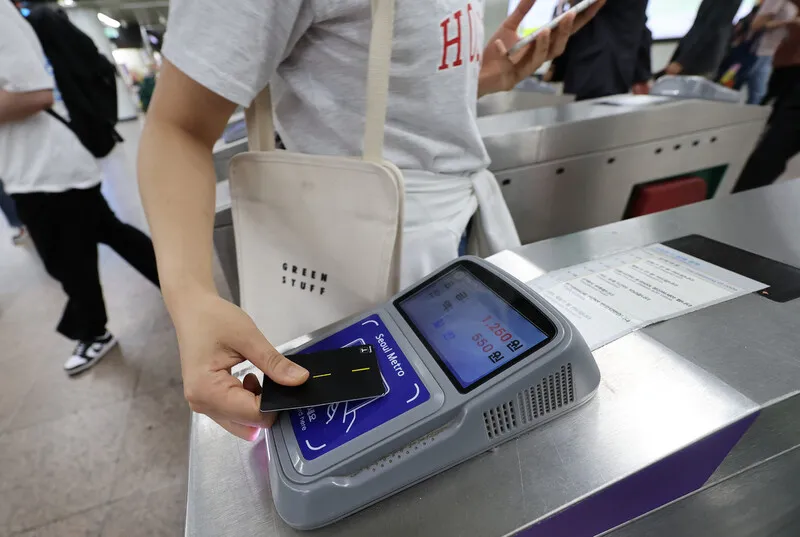
1995년 서울에서 시작된 스마트 교통 카드는 글로벌 대중교통의 표준이 되었습니다.
The smart transit card, started in Seoul in 1995, became the global standard for public transportation.
📖 역사적 배경: 1996년 대한민국 서울 시내버스에 세계 최초로 비접촉식 결제(RF) 시스템이 상용화되면서 시작되었으며, 이후 지하철 환승 시스템과 결합하여 현대 도시 교통의 핵심이 되었습니다.
📖 Historical Background: It began in 1996 when the world's first contactless payment (RF) system was commercialized on Seoul city buses, and later combined with the subway transfer system to become the core of modern urban transportation.
🗣 실전 어휘 & 문법 (Vocabulary & Grammar)
어휘 1: 결제 [Gyeol-je] / Payment
어휘 2: 환승 [Hwan-seung] / Transfer (between transportations)
문법: -기 때문에 / Because of, Due to... (명확한 이유나 원인을 나타냄)
(I take the subway because there is traffic during rush hour.)
📝 연습문제 (Practice Quiz)
Q1 (어휘): 대중교통 요금이나 물건 값을 내는 것을 ( )(이)라고 합니다. (정답: 결제)
Q2 (어휘): 버스에서 내려서 바로 지하철로 갈아타는 것을 ( )(이)라고 합니다. (정답: 환승)
Q3 (문법): 지갑에 교통 카드가 있( ) 현금이 필요 없습니다. [Because I have] (정답: 기 때문에)
3. 즉석 라면 조리기 (Instant Ramen Cooker)
한강 라면 조리기는 야외에서 최상의 라면 맛을 구현합니다.
The Hangang ramen cooker delivers the perfect ramen taste outdoors.
📖 역사적 배경: 1990년대 후반 한강 공원의 매점 등에서 끓인 라면을 대량으로 편리하게 판매하기 위해 발명된 기계로, 한국 특유의 '빨리빨리' 문화와 야외 활동이 결합된 결과물입니다.
📖 Historical Background: A machine invented in the late 1990s to conveniently sell large quantities of boiled ramen at convenience stores in Hangang Park, combining Korea's unique 'hurry up' culture with outdoor activities.
🗣 실전 어휘 & 문법 (Vocabulary & Grammar)
어휘 1: 끓이다 [Kkeu-ri-da] / To boil (liquid)
어휘 2: 야외 [Ya-oe] / Outdoors
문법: -기 위해(서) / In order to... (목적이나 의도를 나타냄)
(I study every night in order to pass the Korean test.)
📝 연습문제 (Practice Quiz)
Q1 (어휘): 냄비에 물을 넣고 뜨겁게 만드는 것을 물을 ( )고 합니다. (정답: 끓인다)
Q2 (어휘): 실내가 아니라 밖의 공간, 예를 들어 공원 같은 곳을 ( )(이)라고 부릅니다. (정답: 야외)
Q3 (문법): 맛있는 라면을 먹( ) 한강 공원에 갔습니다. [In order to eat] (정답: 기 위해서)
4. 짬짜면 그릇 (Half-and-Half Chinese Bowl)
짜장면과 짬뽕 사이의 고민을 해결한 창의적인 그릇입니다.
A creative bowl that solved the dilemma between Jajangmyeon and Jjamppong.
📖 역사적 배경: 1999년 한 아이디어 공모전에서 한국인들이 중국집에서 흔히 겪는 메뉴 선택의 어려움을 해결하고자 발명된 아이템으로, 실용성을 극대화한 식기 디자인의 대표 사례입니다.
📖 Historical Background: An item invented in a 1999 idea contest to solve the difficulty of choosing a menu commonly experienced by Koreans at Chinese restaurants, and is a representative example of highly practical tableware design.
🗣 실전 어휘 & 문법 (Vocabulary & Grammar)
어휘 1: 선택 [Seon-taek] / Choice, Selection
어휘 2: 반반 [Ban-ban] / Half and half
문법: -(으)ㄹ지 고민하다 / To hesitate whether to... (결정을 내리지 못하고 망설임)
(I am hesitating whether to meet a friend or rest at home this weekend.)
📝 연습문제 (Practice Quiz)
Q1 (어휘): 여러 가지 중에서 자신이 원하는 것을 고르는 것을 ( )(이)라고 합니다. (정답: 선택)
Q2 (어휘): 두 가지 메뉴를 50%씩 나누어 담은 것을 ( )(이)라고 부릅니다. (정답: 반반)
Q3 (문법): 짜장면을 먹( ) 짬뽕을 먹( ) 항상 고민해요. [hesitate whether to eat] (정답: 을지)
5. 테이블 호출벨 (Restaurant Wireless Call Bell)
식당 운영의 효율성을 극대화한 한국의 독창적인 시스템입니다.
Korea's unique system that maximizes restaurant operation efficiency.
📖 역사적 배경: 1990년대 한국의 붐비는 식당 문화에서 종업원을 큰 소리로 부르는 불편함과 서비스 지연을 줄이고자 무선 송수신 기술을 접목해 고안되었습니다.
📖 Historical Background: Designed with wireless transmission technology in the 1990s Korean crowded restaurant culture to reduce the inconvenience of calling staff loudly and service delays.
🗣 실전 어휘 & 문법 (Vocabulary & Grammar)
어휘 1: 누르다 [Nu-reu-da] / To press, push
어휘 2: 종업원 [Jong-eo-bwon] / Employee, Staff (at a restaurant/store)
문법: -(으)면 되다 / All you need to do is... (어떤 조건만 충족하면 충분함을 의미)
(All you need to do is write your name and phone number here.)
📝 연습문제 (Practice Quiz)
Q1 (어휘): 손가락으로 버튼에 힘을 가하는 것을 ( )고 합니다. (정답: 누른다)
Q2 (어휘): 식당이나 카페에서 손님에게 서비스를 제공하는 사람을 ( )(이)라고 합니다. (정답: 종업원)
Q3 (문법): 도움이 필요할 때 이 버튼만 누르( ). [All you need to do is press] (정답: 면 됩니다)
6. 카페 진동벨 (Cafe Paging Buzzer)
카페 문화의 상징인 진동벨은 고객 간의 분쟁을 방지합니다.
The paging buzzer, a symbol of cafe culture, prevents disputes among customers.
📖 역사적 배경: 2000년대 초반 패스트푸드점과 대형 프랜차이즈 카페가 늘어나면서, 시끄러운 환경에서도 고객이 자신의 대기 순서를 혼동하지 않고 정확히 알 수 있도록 도입되어 빠르게 확산되었습니다.
📖 Historical Background: As fast-food restaurants and large franchise cafes increased in the early 2000s, it was introduced and quickly spread so that customers could accurately know their waiting order without confusion even in noisy environments.
🗣 실전 어휘 & 문법 (Vocabulary & Grammar)
어휘 1: 진동 [Jin-dong] / Vibration
어휘 2: 대기하다 [Dae-gi-ha-da] / To wait, Stand by
문법: -는 동안 / While (doing something)... (어떤 행동이나 상태가 지속되는 시간)
(While my friend was ordering coffee, I got a seat by the window.)
📝 연습문제 (Practice Quiz)
Q1 (어휘): 핸드폰이나 기계가 부르르 떨리는 현상을 ( )(이)라고 합니다. (정답: 진동)
Q2 (어휘): 음식이 나올 때까지 자기 순서를 기다리는 것을 ( )고 합니다. (정답: 대기한다)
Q3 (문법): 주문한 커피가 만들어지( ) 자리에 앉아 계세요. [While being made] (정답: 는 동안)
7. 4면 결착 밀폐 용기 (Airtight Container)
주방 문화를 혁신한 100% 밀폐력을 자랑하는 용기입니다.
A container boasting 100% airtightness that revolutionized kitchen culture.
📖 역사적 배경: 1998년 한국의 주방용품 기업 락앤락(LocknLock)이 플라스틱 용기 뚜껑의 4면을 잠그는 힌지(Hinge) 방식을 최초로 개발하여 국물이 많은 한국 음식의 완벽한 보관을 가능하게 했습니다.
📖 Historical Background: In 1998, LocknLock, a Korean kitchenware company, first developed a hinge method that locks the four sides of a plastic container lid, enabling perfect storage of Korean food with a lot of broth.
🗣 실전 어휘 & 문법 (Vocabulary & Grammar)
어휘 1: 뚜껑 [Ttu-kkeong] / Lid, Cover
어휘 2: 신선하다 [Sin-seon-ha-da] / Fresh
문법: -아/어 두다 / To do something and keep it that way (어떤 행동을 한 후 그 상태를 유지함)
(I put the leftover pizza in the fridge and kept it there to eat later.)
📝 연습문제 (Practice Quiz)
Q1 (어휘): 그릇이나 병의 내용물이 나오지 않도록 덮는 물건을 ( )(이)라고 합니다. (정답: 뚜껑)
Q2 (어휘): 냉장고에 보관한 채소나 과일의 상태가 좋은 것을 ( )고 합니다. (정답: 신선하다)
Q3 (문법): 남은 반찬을 밀폐 용기에 담아서 냉장고에 넣( ). [put and keep it there] (정답: 어 둡니다)
💡 함께 읽으면 좋은 글 (Related Lessons):


댓글
댓글 쓰기