The Birth of Three Sages and the Origin of JEJU island, K-Myth (6) : 제주의 탄생 '삼성혈 신화'
삼성혈 신화
(The Legend of Samseonghyeol)
🌋세 신선의 탄생과 탐라국의 기원
The Birth of Three Sages and the Origin of Tamna
- 제주도 모흥각 땅속의 세 구멍에서 세 신선(양을나, 고을나, 부을나)이 솟아났습니다.
- 그들은 수렵 생활을 하다가 바다를 통해 온 벽랑국의 세 공주와 결혼하였습니다.
- 곡식 씨앗과 가축을 받아 농경을 시작하며 고대 탐라국을 세우고 개척하였습니다.
- 이 신화는 제주도 독자적인 역사와 농업 및 정착 문화의 시작을 상징합니다.
Three deities—Yang-eulna, Go-eulna, and Bu-eulna—emerged from three holes in the ground at Moheunggak in Jeju Island. While living by hunting, they married three princesses from the Byeokrang Kingdom who arrived by sea. Receiving grain seeds and livestock, they started farming and established the ancient Tamna Kingdom. This myth symbolizes the unique history of Jeju and the beginning of its agricultural lifestyle.
📖 삼성혈 이야기 (The Story)
아주 먼 옛날, 제주도의 한 수풀 속 땅에서 신비로운 세 개의 구멍이 생겨났고, 그곳에서 세 신선이 솟아났어요. 그들의 이름은 고을나, 양을나, 부을나였으며, 이들은 가죽옷을 입고 사냥을 하며 살았습니다.
A very long time ago, three mysterious holes appeared in the ground inside a forest of Jeju Island, and three deities emerged from them. Their names were Go-eulna, Yang-eulna, and Bu-eulna, and they lived by wearing leather clothes and hunting animals.
세 신선은 평화롭게 살았지만 아직 농사를 짓지 못했고 함께 살 짝도 없었어요. 그러던 어느 날, 동쪽 바닷가로 거대한 나무 상자 하나가 떠밀려왔습니다.
The three deities lived peacefully, but they did not know how to farm yet and had no partners to live with. Then one day, a massive wooden box drifted to the eastern seashore.
상자를 열어보니 벽랑국에서 온 아름다운 세 공주와 송아지, 망아지, 그리고 오곡의 씨앗이 들어있었어요. 공주들은 세 신선에게 정중하게 인사를 건넸습니다.
"저희는 신의 계시를 따라 당신들과 결혼하여 새로운 나라를 개척하기 위해 이곳에 왔습니다."
Inside the box, there were three beautiful princesses from the Byeokrang Kingdom, along with calves, colts, and five grain seeds. The princesses greeted the three deities politely: "Following a divine revelation, we came here to marry you and pioneer a new country."
세 신선은 매우 기뻐하며 공주들을 맞이했고, 결혼을 한 뒤 각자 살 곳을 정해 정착했습니다. 그들은 가져온 씨앗을 심고 가축을 기르며 풍요로운 탐라국을 함께 건설해 나갔답니다!
The three deities were overjoyed to welcome the princesses, and after getting married, they settled down by choosing their own places to live. They planted the seeds, raised the livestock, and together built the prosperous kingdom of Tamna!
📚 어휘장 이론 기반 심화 어휘 설명
삼성혈 신화의 핵심은 '발생'과 '개척'입니다. 동화 속 주요 표현을 분석해 봅시다.
The core themes are 'emergence' and 'pioneering'. Let's analyze key expressions from the tale.
솟아나다 (To spring up / To emerge)
상세 설명: 안이나 아래에서 밖이나 위로 강하게 튀어나오거나 솟구치는 것을 뜻합니다. 삼성혈 신화에서 세 신선이 하늘이 아닌 '땅속 구멍'에서 태어난 독특한 탄생 상황을 나타내는 핵심 어휘입니다.
Deep Dive: To spring up or burst out strongly from inside or below to the surface. It is a key vocabulary showing the unique birth situation of the three deities emerging from 'ground holes' rather than heaven.
| 유의어 (Synonyms) | 솟구치다 (To gush out), 나타나다 (To appear) |
|---|---|
| 반의어 (Antonyms) | 가라앉다 (To sink), 꺼지다 (To hollow out) |
| 확장어 (Expansion) | 샘물이 솟아나다 (Spring water gushes out), 힘이 솟아나다 (Energy surges up) |
| 활용 예시 (Collocation) | 땅에서 세 신선이 솟아났습니다. (Three deities emerged from the ground.) |
개척하다 (To pioneer / To develop)
상세 설명: 거친 땅을 일구어 쓸모 있게 만들거나, 새로운 분야나 운명을 스스로 열어 나가는 것을 의미합니다. 제주도라는 섬 안에서 농경 사회를 시작한 역사적 행위를 뜻합니다.
Deep Dive: Meaning to cultivate wild land to make it useful, or to open up a new field or destiny by oneself. It represents the historical act of beginning an agricultural society within Jeju Island.
| 유의어 (Synonyms) | 개발하다 (To develop), 창조하다 (To create) |
|---|---|
| 반의어 (Antonyms) | 수수방관하다 (To stand by and watch), 방치하다 (To neglect) |
| 활용 예시 (Collocation) | 새로운 미래를 개척하다 (To pioneer a new future), 황무지를 개척하다 (To cultivate the wasteland) |
정착하다 (To settle down)
상세 설명: 일정한 곳에 자리를 잡아 붙박이로 사는 것을 의미합니다. 떠돌아다니며 사냥을 하던 세 신선이 농사를 지으며 마을을 이루고 살게 된 변화를 보여줍니다.
Deep Dive: Meaning to fix one's residence and live permanently in a certain place. It shows the transformation of the three deities from wandering hunters into settled farmers forming a village.
| 유의어 (Synonyms) | 거주하다 (To reside), 안주하다 (To settle peacefully) |
|---|---|
| 반의어 (Antonyms) | 방랑하다 (To wander), 이주하다 (To migrate) |
| 활용 예시 (Collocation) | 새로운 고향에 정착했습니다. (They settled down in their new hometown.) |
✍️ 핵심 문법 (Essential Grammar)
1. -기 위해(서) (In order to / For the sake of)
어떤 행위를 하는 목적이나 의도를 분명하게 나타낼 때 사용하는 문법입니다.
A grammar structure used to clearly express the purpose or intention of a certain action.
예문: "우리는 새로운 나라를 개척하기 위해 이곳에 왔습니다."
Example: "We came here in order to pioneer a new country."
2. -다가 (While doing something, another action occurs)
어떤 행동이나 상태가 중단되고 다른 행동이나 상태로 바뀔 때 사용합니다.
Used when a certain action or state is interrupted and transitions into another action or state.
예문: "세 신선은 사냥을 하다가 상자를 발견했습니다."
Example: "The three deities were hunting when they discovered the box."
🏛️ 역사적 기록과 실제 유적
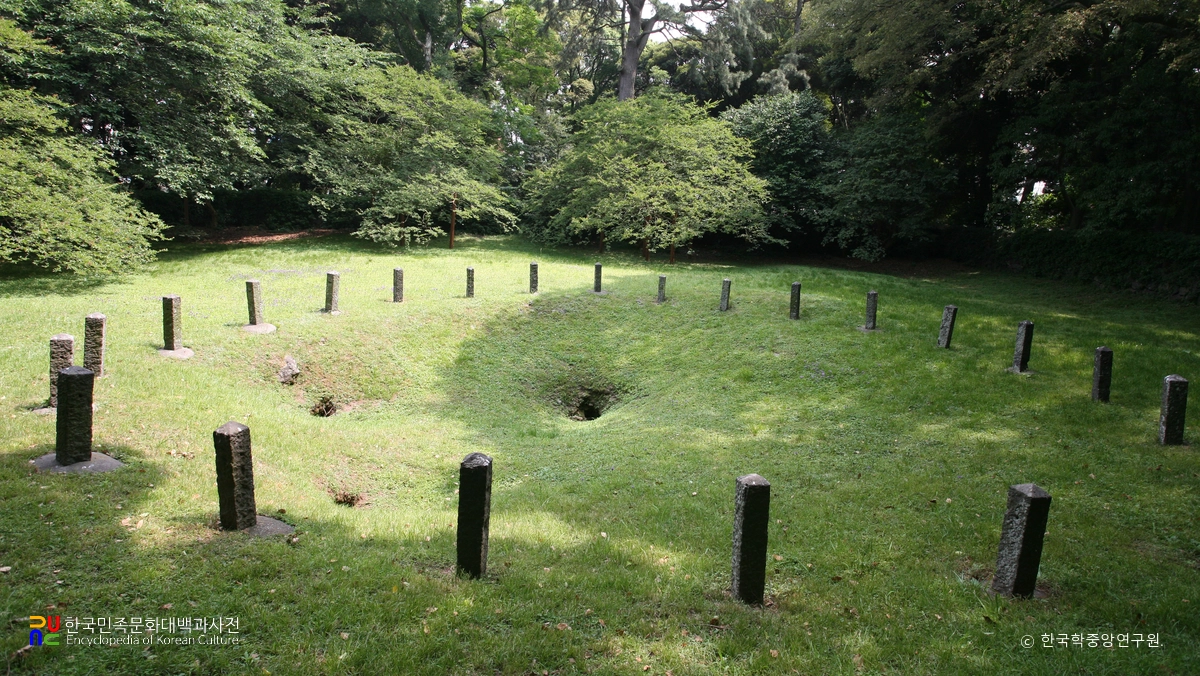
1. 제주 삼성혈 (Samseonghyeol Ruins): 현재 대한민국 제주특별자치도 제주시에 위치한 고대 유적으로, 신화 속 세 신선이 솟아났다고 전해지는 세 개의 구멍이 실제로 보존되어 있으며 주위의 고목들이 구멍을 향해 고개를 숙이듯 자라는 신비한 경관을 볼 수 있습니다.
1. Samseonghyeol Shrine: An ancient site located in present-day Jeju City, South Korea. The three holes from which the deities are said to have emerged are actually preserved, surrounded by ancient trees growing as if bowing toward the holes.
2. 혼인지 (Honinji Pond): 제주도 성산읍에 위치한 연못으로, 세 신선이 벽랑국 세 공주를 맞이하여 혼례를 올린 장소로 전해지며 제주의 전통 농경 축업 문화의 시작을 알리는 중요한 유적지입니다.
2. Honinji Pond: A pond located in Seongsan-eup, Jeju, where the three deities are said to have held their wedding with the three princesses of Byeokrang, marking the historical starting point of agricultural life in Jeju.
✍️ 실전 복습 퀴즈
Q1. 아래에서 위로 힘있게 튀어나오는 모양을 뜻하는 알맞은 단어는 무엇일까요?
Q1. What is the correct word meaning to spring up powerfully from below to the surface?
① 정착하다 ② 솟아나다 ③ 개척하다 ④ 다스리다
Q2. 다음 빈칸에 목적을 나타내는 알맞은 표현은? "한국어를 잘 ( ) 매일 연습합니다."
Q2. Choose the best expression for the blank to indicate purpose: "I practice every day in order to speak Korean well."
① 공부하다가 ② 공부하라고 ③ 공부하기 위해 ④ 공부했습니다


댓글
댓글 쓰기